TND Universe

Swiss Excellence, Global Perspective

Image Image
Who we are

Our Vision

Our vision is to be a leading force in creating real estate, mobility & energy opportunities that shape better communities and brighter futures.

Our Mission

To create, invest in and deliver exceptional real estate, mobility & energy solutions through innovation, professionalism, and a commitment to understanding our clients’ unique needs.

We offer

Portfolio

Recent Cases

View all
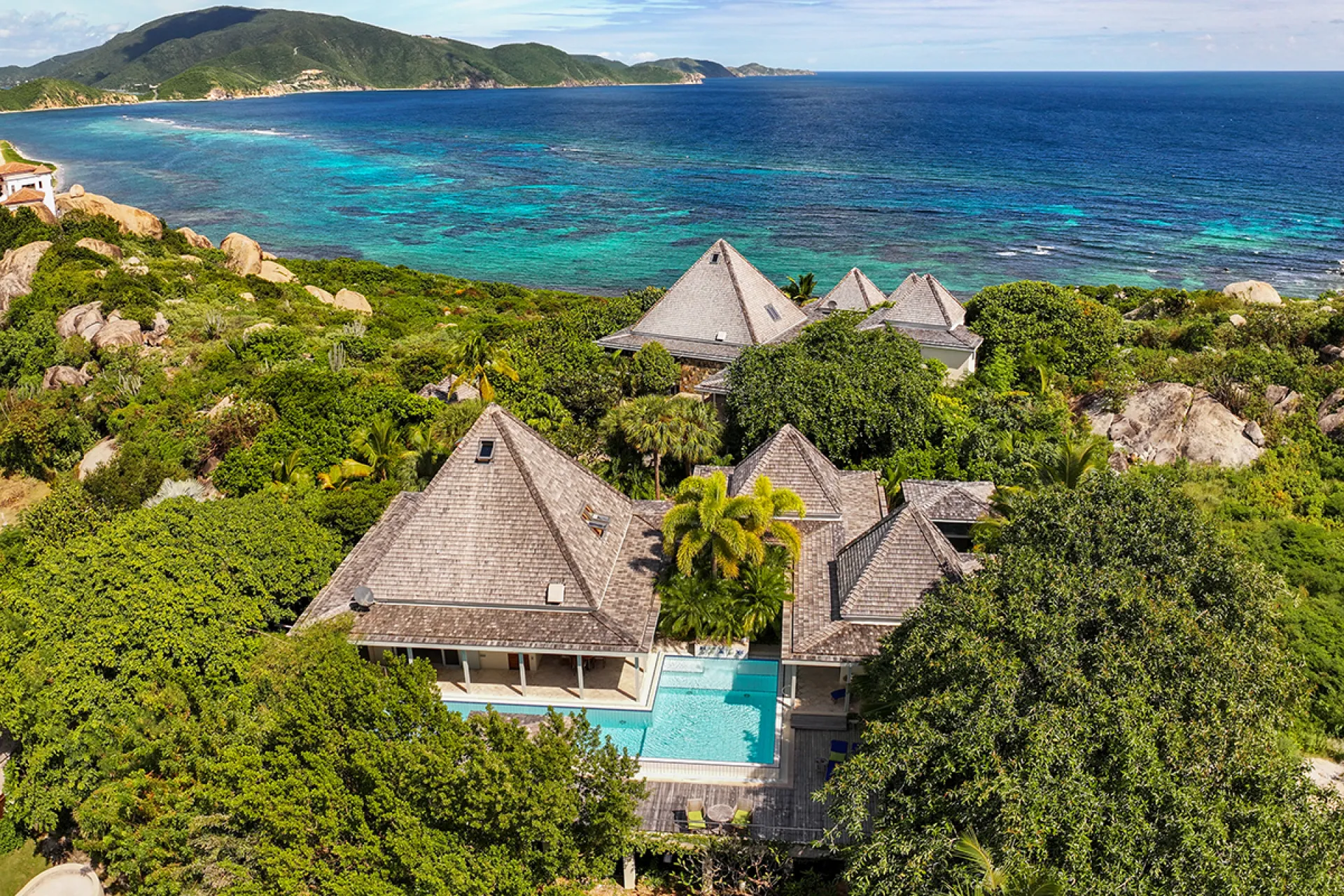
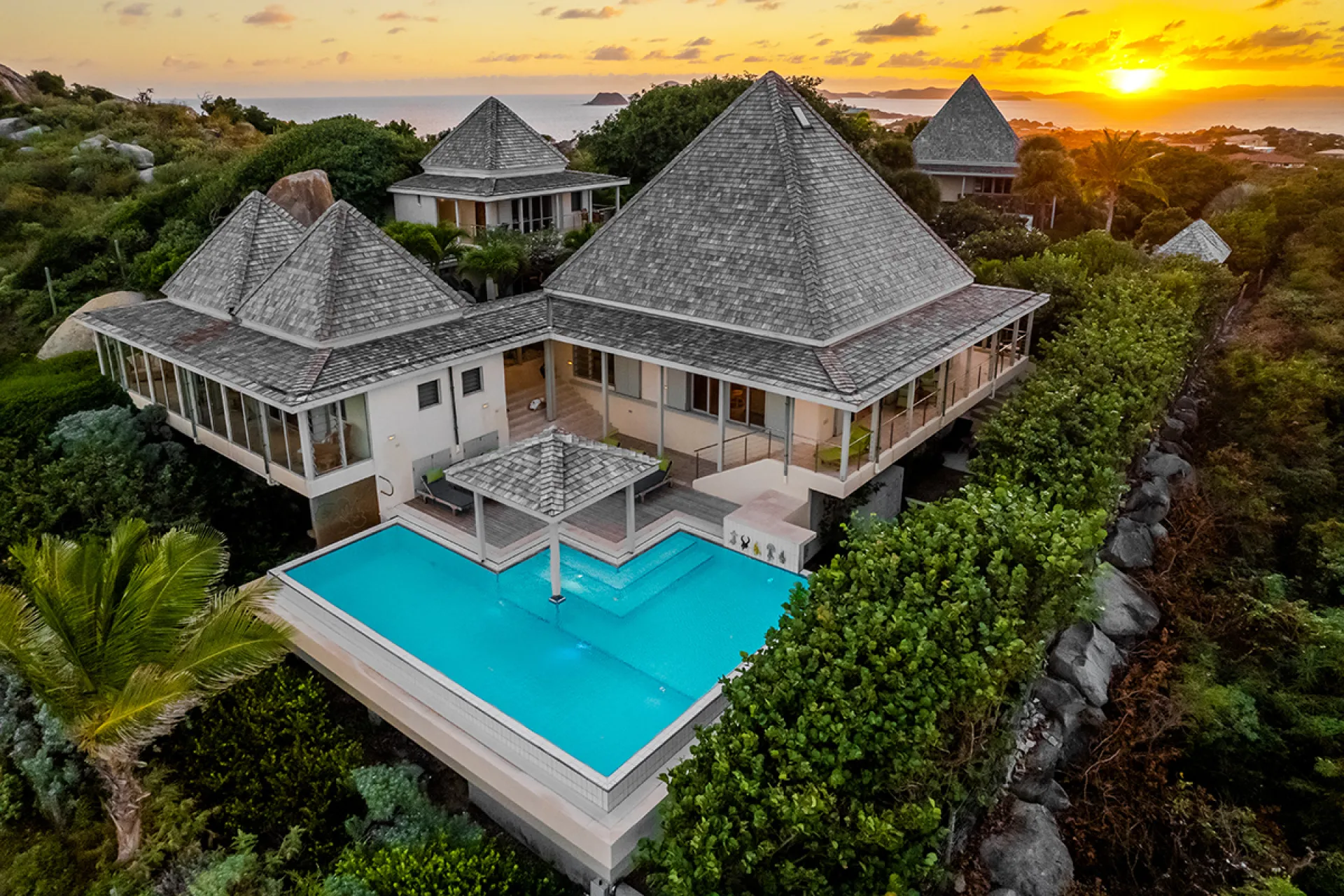
Salt Spring Villa & Spa

Salt Spring Villa & Spa

470 m²

Virgin Gorda, British Virgin Islands, Caribbean.

Red Rock Villa & Spa

Red Rock Villa & Spa

660 m²

Virgin Gorda, British Virgin Islands, Caribbean.

News & Events

Two permitting regimes, one grid: why Swiss nuclear licensing decides the cost

On 1 April 2026, Switzerland's Acceleration Decree came largely into force, shortening permitting and appeal procedures for large solar, wind and hydropower installations of national interest. Eleven weeks later, on 19 June, Parliament lifted the fifteen-year ban on new nuclear plants, and left the licensing architecture for those plants exactly where it was, adding one new condition at the entrance. Demand is heading from roughly 60 terawatt-hours today toward 68 to 81 by 2050. The country now runs two permitting regimes for the same grid: a fast lane for renewables, and for nuclear the old road, with a new toll booth at the start of it.

We have made this argument in two parts already: in June, that the winter supply gap makes this a sovereignty question rather than an energy-policy preference; in July, that Parliament legalised the plant while refusing the financing that would make it bankable. This is the third part, and the one nobody is debating: the procedure.

1. What does the nuclear licensing procedure actually require today?

Three stages, in a fixed order. The first is the framework licence, the Rahmenbewilligung, granted by the Federal Council under Art. 12 para. 1 of the Nuclear Energy Act (KEG), submitted to the Federal Assembly for approval, and subject to the optional referendum (Art. 48 paras. 1, 2 and 4 KEG). The Assembly is not a rubber stamp in one direction only: if the Council refuses and the Assembly declines to endorse that refusal, it instructs the Council to grant the licence (Art. 48 para. 3).

Only then come the construction and operating licences, both granted by the federal department (Art. 15 and 19 KEG). The construction licence presupposes a legally final framework licence and a project that complies with it (Art. 16 para. 2). These stages run under the Administrative Procedure Act; no cantonal permits are required, and the host canton is heard and may appeal if the department licenses over its objection (Art. 49 paras. 1, 3 and 4).

What Parliament changed in June was the prohibition, not the architecture. The two ban provisions were deleted, together with the cross-reference to them in Art. 12 para. 1, and a condition was added that a framework licence may be granted only where construction and operation are financially secured. The legislator declined to write a ban on federal participation into the law, and has not designed one either. The sequence a sponsor must fund is unchanged, and it now carries an additional hurdle placed before the first stage rather than after it.

2. Why is the first stage the most expensive risk?

Because duration and risk are not the same cost. Duration is a financing problem: more interest capitalised before the first franc of revenue. Painful, but calculable. Risk is an equity problem: the possibility that money already spent produces nothing at all, priced not in basis points but in the return an investor demands before committing anything.

Swiss nuclear licensing concentrates that second cost at precisely the wrong place, and it does so in the statute rather than in practice. Art. 12 para. 2 KEG provides that there is no legal entitlement to a framework licence. The Federal Office of Energy spells out the consequence in its own materials: a refusal must be accepted by the applicant without compensation. Set that beside the condition Parliament has now added, and the sequence reads as follows.

Secure the financing first, for a licence the law says you have no right to, and whose refusal costs the state nothing.

That is not a drafting oversight; it is a genuine circularity, and the most expensive single feature of the Swiss framework. A financing structure must be demonstrated in advance of a decision that is political in character, that no applicant can compel, and whose failure the applicant bears alone. Andreas Pautz, professor of nuclear engineering at EPFL and head of nuclear energy and safety research at the Paul Scherrer Institute, made the same point in the NZZ on 10 August: the dominant risks are planning risks, meaning objections and adverse popular votes, and investors will demand a premium for them.

The asymmetry runs through the timing too. The framework licence sets a deadline for filing the construction application and lapses if it is missed (Art. 14 para. 3 and Art. 68 para. 2 KEG). The clock runs against the sponsor; no comparable clock runs against the authorities.

3. What would dropping the framework licence cost in law?

Pautz proposes waiving it at the existing sites of Gösgen and Leibstadt: Western reactor designs are licensable in Switzerland in principle, those sites have demonstrated their suitability, and a two-stage procedure would, he argues, not offend Swiss democratic principles since the construction and operating licences remain. On the substance that is defensible; the technical assessment sits in those later stages.

But the stage is not only a technical filter. It is where the optional referendum sits (Art. 48 para. 4) and where participation is concentrated: application, expert opinions and cantonal positions lie open for three months, anyone may file objections, and parties may lodge formal opposition (Art. 45 and 46 KEG). Delete the stage and you delete a federal referendum right and the principal participation window with it. That engages the guarantee of access to a court under Art. 29a of the Federal Constitution and pushes objections downstream rather than removing them.

For capital, the consequence is counter-intuitive and decisive. Political risk does not disappear when the vote is removed; it relocates: to the construction licence, where the host canton keeps its own appeal right, and to a fresh popular initiative aimed at the outcome. A procedure that removes the ballot without putting finality in its place buys a few years and sells the certainty that made those years worth buying. That is our one departure from an otherwise sound analysis: keep the stage, and make the framework around it bankable.

4. What is actually missing, then?

Less than the acceleration rhetoric suggests, and something more specific. Two of the elements usually demanded already exist: preclusion, since whoever does not file opposition within the inspection period in the construction-licence procedure is excluded from the remainder of the proceedings (Art. 55 para. 1 KEG), and binding effect downward, since the construction licence requires a legally final framework licence and compliance with it (Art. 16 para. 2).

What is missing is narrower and more expensive. First, deadlines that bind the authorities, of the kind the Acceleration Decree now applies to large renewables projects: technology neutrality is not only about what may be built, but about how long the state may take to answer. Second, a rule on frustrated expenditure, since Art. 12 para. 2 places the entire loss of a failed framework procedure on the applicant, a defensible allocation when nobody was expected to apply and an expensive one now that Parliament wants applications. Third, sequencing: requiring proof of secured financing before a political decision no one can compel inverts the order in which infrastructure is actually financed. Fourth, an instrument rather than an unused option: a contract for difference, squared against the Electricity Supply Act, the Energy Act and the 2024 electricity package, treated openly as state aid, and negotiated with the Swiss–EU electricity file in view rather than around it. Pautz points to the same instrument, and to the Swedish combination of low-interest state loans and state co-ownership. Build cost per kilowatt matters, but next to these it is second order.

5. What has to be on the table before the vote?

The calendar is tighter than it looks. The Federal Chancellery reserves 28 February 2027 as the first federal voting date of that year, and the Federal Council settles at least four months beforehand which items actually go to the ballot. The substantive decisions therefore have to be visible this autumn, not in the new year: which risk-transfer instrument the Confederation contemplates; who absorbs construction-cost overrun; what becomes of sunk pre-development cost when a stage fails; and how the long tail is funded, meaning nuclear liability and the decommissioning and waste-disposal funds under Art. 77 KEG, bearing in mind that waste from any new plant would need its own framework licensing procedure for a repository.

On that last point the law is more revealing than the political debate. Art. 80 para. 4 KEG provides that where covering a shortfall is not economically bearable for those subject to the top-up obligation, the Federal Assembly decides whether and to what extent the Confederation contributes to the uncovered costs. The state already stands behind the back end of the nuclear balance sheet.

The other side of the argument

The alliance that launched the referendum on 30 June argues that new plants would deepen Switzerland's dependence on uranium imports from Russia, slow the expansion of renewables, and cost billions. Those objections deserve answers rather than dismissal.

Two are answerable. Dependence is not avoided by choosing renewables but relocated, to Chinese solar manufacturing and to the rare earths wind turbines require, as Pautz notes. And uranium can be stockpiled in a way gas cannot, from a supplier base running from Australia and Canada to Namibia and Kazakhstan. Cost is a reason to structure financing intelligently, not to rule out a technology. The third objection is the strongest: neither the financing architecture nor the procedural reform is on the ballot. On that we agree, and draw the opposite conclusion. A vote on an incomplete framework is an argument for completing the framework before the vote, not for rejecting the option and discovering in the winters after 2035 that the alternative was permanent import dependence.

Our view

Our position has not moved: Switzerland needs new nuclear. A firm domestic baseload on the order of 25 to 30 terawatt-hours, roughly today's nuclear share carried into a larger system, is what energy sovereignty actually looks like, and the designs that would supply it, including the small modular units now approaching deployment, are markedly safer than the plants they would replace. Pautz puts that comparison more sharply than we would: «Zehn weitere Jahre Betrieb von Altanlagen sind riskanter als ein neues AKW.»

Switzerland has built a fast lane for one set of technologies and left another on a road it has not resurfaced since 2003. The asymmetry inside the nuclear regime is sharper still: the Confederation has left the risk at the front of a project uncarried, where it is cheap, calculable and would move the financing cost that decides everything else, while the law already has it carrying residual risk at the back, where it is open-ended.

In July we wrote that permission without financing is symbolism rather than location policy. The same is true of permission without procedure. The correction is not to demolish a licensing stage and call it acceleration. It is to bind the authorities to deadlines as the law now binds the applicant, to say what happens to frustrated expenditure when a stage fails, to sequence the financing condition so that it follows the political decision instead of preceding it, and to legislate an instrument an investor can underwrite. Permission that cannot be relied upon is not an investment framework. Switzerland has one autumn to turn one into the other.

Dr. iur. Alexander Schiemenz is a co-founder of TND Universe, which creates, invests in and delivers real estate, mobility and energy solutions across their full lifecycle. If you are assessing an energy infrastructure position ahead of the vote, we advise on permitting risk, financing structure and the legal architecture that decides whether a permitted project is a bankable one.

Sources

1. Nuclear Energy Act (KEG), SR 732.1, consolidated text. Fedlex: https://www.fedlex.admin.ch/eli/cc/2004/723/de

2. Acceleration Decree for renewable energies, in force 1 April 2026. Federal Office for Spatial Development (ARE): https://www.are.admin.ch/de/beschleunigungserlass-erneuerbare-energien

3. Indirect counter-proposal to the "Blackout stoppen" initiative, explanatory report (provisions deleted; no compensation on refusal; separate licensing procedure for a repository). SFOE/DETEC: https://www.newsd.admin.ch/newsd/message/attachments/91232.pdf

4. Federal Council message of 13 August 2025 on the indirect counter-proposal. admin.ch: https://www.admin.ch/de/newnsb/GIECKzWVs6ZX6W1ba4i6X

5. UREK-S of 20 January 2026, recommendation to lift the framework-licence ban. Parliamentary Services: https://www.parlament.ch/press-releases/Pages/mm-urek-s-2026-01-20.aspx?lang=1031

6. Council of States decision of 11 March 2026, financing condition. Parliamentary Services: https://www.parlament.ch/de/services/news/Seiten/2026/20260311124425486194158159026_bsd112.aspx

7. Launch of the referendum on 30 June 2026 and the alliance's arguments. Federal Chancellery media announcement: https://www.admin.ch/de/medienkonferenz-nein-zu-neuen-akw-lancierung-des-referendums-gegen-das-atom-gesetz

8. Reserved federal voting dates; Federal Council fixes the agenda at least four months in advance. Federal Chancellery: https://www.bk.admin.ch/ch/d/pore/va/vab_1_3_3_1.html

9. Interview with Andreas Pautz (EPFL / Paul Scherrer Institute), Neue Zürcher Zeitung, 10 August 2026

10. TND Universe, "A Permit Is Not a Power Plant" (13 July 2026): /news/a-permit-is-not-a-power-plant-switzerlands-half-decision-on-new-nuclear

11. TND Universe, "Sovereignty, supply gaps, SMRs" (11 June 2026): /news/five-five-sovereignty-supply-gaps-smrs-what-needs-to-be-understood-before-switzerland-decides-on-nuclear


News
Two permitting regimes, one grid: why Swiss nuclear licensing decides the cost
Who is liable when the car steers itself?

The self-driving car is no longer science fiction, it is already rolling on Swiss roads. Since 1 March 2025, Switzerland has had, with the Ordinance on Automated Driving (VAF)[1], a clear legal framework that for the first time expressly permits motorway pilots, driverless vehicles and automated parking. For once, the legislator was even faster than the industry; while the legal framework is in place, there are currently no series-production vehicles with an approved automation system on the market.

Regulation is developing rapidly not only in Switzerland but worldwide. EU directives, EU regulations and UNECE regulations are also binding on Switzerland. These international requirements ensure the technical harmonisation of road vehicles and promote road safety, environmental protection and the free movement of goods.

Photo by Aamy Dugiere on Unsplash

The following bodies of rules are particularly relevant for automated driving:

  1. Regulation (EU) 2022/1426[1] (in conjunction with Regulation (EU) 2019/2144[2] and Delegated Regulation (EU) 2022/2236[3]) on the type-approval of the automated driving system (ADS) of fully automated vehicles;
  2. the UNECE Regulations on cybersecurity (No. 155)[4], software updates (No. 156)[5], automated lane-keeping systems (No. 157)[6] and driver assistance systems (No. 171)[7]; and
  3. the Vienna Convention of 8 November 1968 on Road Traffic (SR 0.741.10)[8], in particular on the question of whether a driver must be present.

For companies, investors, fleet operators and mobility service providers, this new legal framework opens up considerable opportunities, but also demanding legal questions. We answer five of them below.

When does a car actually drive «by itself»?

Not every vehicle with an assistance system is an automated vehicle. The internationally established SAE J3016 standard distinguishes six levels of automation, from Level 0 to Level 5:

Source: SAE International, Standard J3016. Illustration: TND Universe.

Automated driving only begins at Level 3: vehicles that can take over the driving tasks permanently and comprehensively, at least under certain conditions. Only the highest level, Level 5, is truly «autonomous» in the literal sense; today's systems technically reach a maximum of Level 3.

In Switzerland, three specific use cases have been permitted since March 2025:

1. the motorway pilot: drivers may take their hands off the wheel on motorways, but must be able to intervene again at any time when prompted by the system;

2. automated parking without a driver present in car parks signposted for this purpose; and

3. the operation of driverless vehicles on routes approved by the authorities.

What approvals and technical requirements are needed?

Vehicles with an automation system must meet special requirements going beyond the general requirements in order to be admitted. Under the general requirements set out in Art. 3 VAF, the system must guide the vehicle in the longitudinal and lateral directions, be intuitively deactivatable at any time, have functions for accident avoidance as well as safeguards against unlawful third-party interference, and master all traffic scenarios in accordance with recognised international rules. During operation, the system must take over the operation of the vehicle continuously, comprehensively and reliably, comply with all relevant traffic rules, detect technical malfunctions and indicate the need for human intervention with a sufficient time reserve (Art. 3 paras. 2 and 3 VAF).

The driving-mode memory is central (Art. 7 VAF): automated vehicles must record certain events (such as emergency manoeuvres, collisions or technical malfunctions), together with data elements such as the type of event, time stamp and position. In addition, for the entire supported operating period, manufacturers must hold valid certificates from a national type-approval authority for the management systems for cybersecurity (UN Regulation No. 155), software updates (UN Regulation No. 156) and safety for driverless vehicles under Regulation (EU) 2022/1426 (Art. 8 VAF).

Switzerland's approach to type-approval is noteworthy (Art. 11 et seq. VAF): Switzerland currently refrains from having its own type-approval provisions and instead recognises the requirements of the EU and UNECE. Automated vehicles that are to be admitted here therefore require a foreign type-approval; ASTRA (the Federal Roads Office) merely carries out random conformity checks. Manufacturers and importers of driverless vehicles must report safety-relevant incidents to ASTRA, and ASTRA may declare new provisions applicable to vehicles that have already been admitted, for instance in the event of a hacking attack (Art. 6 VAF). Operation is thus strongly tied to approval and operating conditions: driverless vehicles require cantonally approved routes and must be supervised by operators from a control centre.

What happens to the recorded data?

Automated vehicles must be equipped with a driving-mode memory (colloquially a «black box») that records events such as the start and end of emergency manoeuvres, system failures, collisions, and the activation and deactivation of the automation system. The processing of this data is subject to strict conditions: under Art. 25g para. 3 SVG, the data may be read out and processed by the competent police, judicial and administrative authorities exclusively for the purpose of investigating accidents or assessing traffic-rule violations.

Manufacturers and importers of driverless vehicles and of vehicles with an automated parking system must report safety-relevant incidents to ASTRA and must agree with the vehicle keepers or the operators of approved parking areas on how the necessary information is to be obtained. Operators of car parks offering automated parking must also notify the police in the event of an accident. Data protection and controlled access to this driving data are therefore a central and legally sensitive building block of the new regime, especially for fleet operators and mobility providers that process large volumes of data.

Who is liable when the software steers?

If a person is harmed in an accident, in principle the insurer provides compensation first; only afterwards is it clarified who was actually responsible. The key point: despite technical autonomy, the vehicle keeper remains liable under the causal liability of Art. 58 SVG, a no-fault, risk-based liability. In an accident involving an automated vehicle, three levels of causation ultimately come into consideration:

  1. the manufacturer (for instance in the case of software or sensor faults under the Product Liability Act);
  2. the driver (if they were steering themselves at the time of the accident); or
  3. the keeper (for example in the case of inadequate maintenance).

Legally, this is so intriguing because the allocation of risk shifts noticeably: from the driver to the system function, from the classic driving error to a product, software or maintenance defect, from pure SVG liability towards questions of recourse, product liability and evidence, and from the visible course of the accident towards the evaluation of technical data. Whether the human or the system was in control at the time of the accident can be traced through the driving-mode memory. The evaluation of this data thus becomes decisive for asserting recourse claims. For manufacturers, importers and operators this means a potentially higher liability risk; and for all parties involved, the urgent need to settle the contractual allocation of risk cleanly at an early stage.

What role does cybersecurity play?

A self-driving vehicle is essentially a rolling computer, and thus a potential target for cyberattacks. Cybersecurity is therefore not merely a peripheral technical issue, but a load-bearing element of the approval regime. Manufacturers must hold valid certificates for their cybersecurity management system under UN Regulation No. 155 and for their software-update management system under UN Regulation No. 156, and this for the entire supported operating period of the vehicle. The aim is to prevent external attacks and to avoid failures and malfunctions.

The regulation also takes account of this risk dynamically: ASTRA may even declare new provisions applicable retrospectively to vehicles that have already been approved and put into circulation, for example when certain vehicle types are affected by a hacking attack (Art. 6 VAF). For companies, this means: cybersecurity is not a one-off approval hurdle, but an ongoing legal and organisational obligation throughout the entire life cycle of the vehicle.

Conclusion

Self-driving vehicles will fundamentally change mobility, and in Switzerland they are already a reality. In Zurich's Furttal, the Swiss Transit Lab, the cantons of Zurich and Aargau and the SBB (Swiss Federal Railways) are deploying self-driving vehicles in the «iamo» pilot project (intelligent automated mobility); following approval by ASTRA, they are for the first time travelling in automated mode on public roads, and the public should be able to use the service in the first half of 2026[10]. Level 5 vehicles do not yet exist, but development is advancing quickly, and it is foreseeable that full automation will follow in the not-too-distant future.

Automated mobility is opening a new frontier of opportunity for investors, developers and operators, and with it a set of questions that deserve early attention: approvals and admission, liability and recourse risks, data access and data protection, and the allocation of risk between manufacturers, importers, operators and users. Addressing these questions early is what turns a promising technology into a sound, long-term investment.

This is precisely where TND Universe adds value. With expertise spanning real estate, mobility and energy, and a commitment to sustainable development, transparency and long-term investment integrity, we help clients evaluate, structure and realise automated-mobility opportunities across their full lifecycle, from initial due diligence through to operation and value creation.

Talk to us. Whether you are looking to invest in, develop or operate automated-mobility solutions, our team can help you navigate the risks and unlock the opportunities of this fast-evolving field. Contact us for a non-binding initial conversation.

Sources

[1] AS 2025 50 - Ordinance of 13 December 2024 on Automated Driving (VAF) | Fedlex

[2] Implementing Regulation - 2022/1426 - EN - EUR-Lex

[3] Regulation - 2019/2144 - EN - EUR-Lex

[4] Delegated regulation - 2022/2236 - EN - EUR-Lex

[5] UN Regulation No. 155 — Uniform provisions concerning the approval of vehicles with regard to cyber security and cyber security management system [2025/5]

[6] UN Regulation No. 156 - Software update and software update management system | UNECE

[7] UN Regulation No. 157 - Automated Lane Keeping Systems (ALKS) | UNECE

[8] UN Regulation No. 171 — Uniform provisions concerning the approval of motor vehicles with regard to Driver Control Assistance Systems (DCAS) [2024/2689]

[9] SR 0.741.10 - Convention of 8 November 1968 on Road Traffic (with annexes) | Fedlex

[10] iamo – intelligent automated mobility; Pilot project «iamo» on automated driving in the Furttal | Canton of Zurich

News
Who is liable when the car steers itself?
A Permit Is Not a Power Plant: Switzerland's Half-Decision on New Nuclear

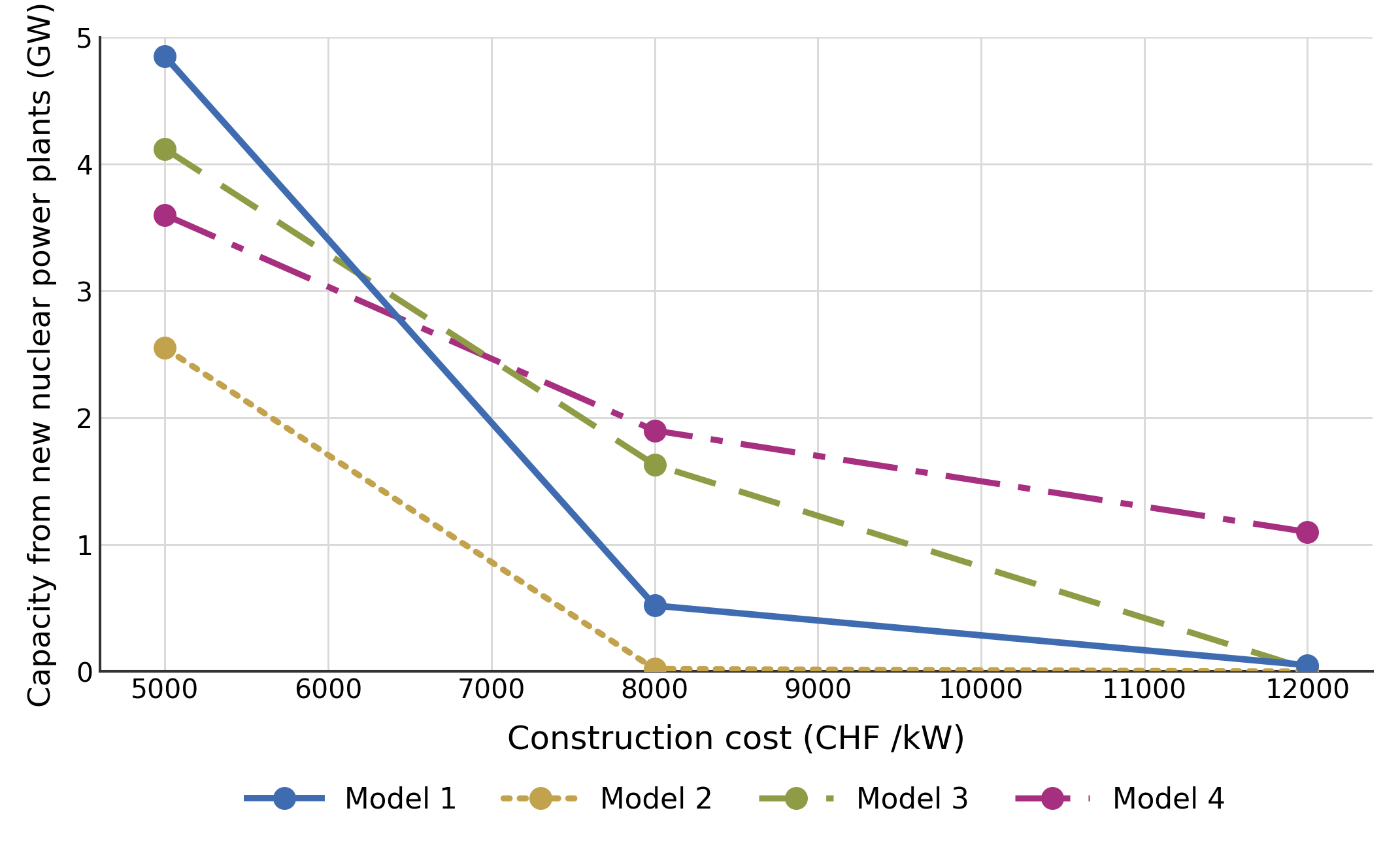
On 29 June 2026, ETH Zurich and the Paul Scherrer Institute published a joint white paper by nineteen researchers across four independent energy-system models. Its message is clear: new nuclear becomes competitive in Switzerland once three conditions line up, the state backs nuclear alongside renewables, financing costs fall from roughly 8% to 5% through guarantees or contracts for difference, and construction costs move toward CHF 8,000 per kilowatt or below. The lower the build cost, the stronger the case: new nuclear pencils out in one of the four models even at CHF 12,000 per kilowatt, and in more of them as costs fall toward CHF 5,000.

That is the tension: Parliament made new plants possible while withholding the very support the study calls their precondition. Lifting the ban is right, but only half a decision. The five questions below set out what was decided, what was left out, and what still has to be settled before the vote.

A permit is not a power plant. Parliament legalized the building and, in the same breath, outlawed the one thing that would make it bankable.

1. What did Parliament actually decide, and what did it leave out?

On 18 June 2026 the National Council, following the Council of States, adopted the Federal Council's indirect counter-proposal to the “Blackout stoppen” initiative by 108 votes to 87, making new nuclear plants legally buildable for the first time in fifteen years. Concretely, the counter-proposal deletes Article 12a and Article 106 para. 1 bis of the Nuclear Energy Act (KEG), the provisions that since 2018 barred any general license for a new plant, and inserts a requirement that financing be secured in advance. On its face, this restores technology neutrality. But the parliamentary majority went further than mere permission: the National Council line rejects state support for new reactors and would grant a framework license only where the construction and operation of a plant are financially assured on private terms. In other words, the legislator has re-opened the door and, at the same time, removed the ramp that leads to it. The decision answers the question of legality. It leaves entirely open the question that actually governs whether a plant ever gets built: who carries the multi-decade financial risk, the very point the ETH study puts front and center.

2. What does the ETH study show, and where do we part ways?

The arithmetic is careful, and on its own terms it holds: new plants become competitive once the state supports them, financing costs fall from around 8% to 5%, and construction costs move toward CHF 8,000 per kilowatt. We accept that. But two features deserve emphasis. The analysis does not model small modular reactors as a technology in their own right. It represents nuclear through a single capital cost per kilowatt of installed capacity, and its most expensive case, CHF 12,000 per kilowatt, is taken from recent first-of-a-kind gigawatt projects in Europe and the United States. The authors themselves attribute those prices to being the first of their kind, and expect learning to bring costs toward CHF 8,000. The serial, factory-built logic of modular reactors is exactly the route to the lower costs at which the models turn positive, yet it lies outside them. And while it is right that Switzerland could reach net zero without new nuclear, leaning on hydropower and photovoltaics for roughly three quarters of supply, that path quietly accepts structural winter import dependence as its price. That is what we are not willing to accept. A high first-of-a-kind cost is an argument for a serious build program and a sound financing framework, not for treating nuclear as optional.

Construction cost
Figure 1: With political support and financing costs cut from 8% to 5%, construction cost decides how much new nuclear gets built across the four models. At CHF 12,000 per kilowatt, capacity falls toward zero in three of the four. Data: ETH Zurich / PSI (29 June 2026); figure recreated in English by TND Universe.

3. How much nuclear does Switzerland need to stay sovereign?

Enough to stay in control of its own winter supply. Demand is set to climb from about 57 terawatt-hours today to between 75 and 90 by 2050 as transport, heating and industry electrify, just as the existing reactors, some 23 terawatt-hours, reach the end of their lives. On a cold, windless winter night, solar and run-of-river hydro cannot cover that load, and the gap is filled by imports from neighbors whose own margins are shrinking. A firm domestic baseload of 25 to 30 terawatt-hours, roughly nuclear's share today carried into a larger system, would keep that capacity in Swiss hands instead of surrendering it to a market the country does not steer. Letting the fleet retire unreplaced does the opposite. That reactors are slow or costly to build is an argument about execution, not direction, and the technology answers part of it: the latest designs, including the small modular units now nearing deployment, are markedly safer than the plants they would replace, built around passive safety and a far smaller footprint. The wiser course is to treat that firm capacity as the strategic asset it is, a dependable foundation for the country's future supply.

4. Is there a lawful financing path, and should the state take it?

There is, and Switzerland has the legal tools to build it. A contract for difference, under which the state guarantees a fixed strike price and settles the gap either way, is the instrument the ETH authors point to, and it is precisely what the National Council line refuses. Introducing it would mean squaring it with the Electricity Supply Act (StromVG), the Energy Act (EnG) and the 2024 “Mantelerlass” on secure electricity supply from renewables, and treating it honestly as state aid. None of that is a barrier so much as a design task: the European Union already uses a contract for difference for new nuclear, at Hinkley Point C, which shows the instrument is workable rather than forbidden and gives Switzerland a template to negotiate around in its own electricity talks with Brussels. Behind the build cost sits the long tail, liability under the Nuclear Energy Liability Act and the decommissioning and waste-disposal fund, and a serious framework prices that in from the start. These are reasons to design the financing carefully. They are not reasons to leave the permission empty.

5. What should be decided now, in the window before February 2027?

The supply gap is real, and it widens as the economy electrifies: petrol cars give way to electric ones, oil and gas boilers to heat pumps, fossil-fueled industrial processes to electric ones, and digital infrastructure and data centers add load of their own. Without firm domestic baseload, Switzerland will meet that rising winter demand with imports, year after year. That is an argument for deciding seriously, not for deciding halfway. If the country wants the nuclear option to be genuine, it must legislate the financing architecture the ETH study itself identifies as the precondition: a defined risk-transfer mechanism, a bankable license framework, and a clear-eyed answer on state aid and the EU electricity file. What it should not do is what it has done so far: permit the plant, forbid the financing, and leave investors to reconcile the contradiction. Switzerland has made the easy half of the decision. The hard half is still on the table, and the months before the vote are the time to put it there.

Opponents, among them the Schweizerische Energiestiftung, the Social Democrats and the Greens, read the same study as proof that new nuclear is neither economic nor necessary, and want the repeal rejected at the ballot. We read it differently. A system in which net zero is technically reachable without nuclear is not the same as a supply that stays secure, sovereign and affordable in the depths of winter. Cost is a reason to structure the financing intelligently, not a reason to rule out a technology the country will need.

Our view

From a legal and economic perspective, repealing the new-build ban is only a first step, not yet a bankable investment framework. As long as the legislature does not create a financing architecture that investors can rely on, the planning certainty infrastructure investment requires is missing. Our position is clear, and it is not the study's: Switzerland needs new nuclear. Holding a firm domestic baseload on the order of 25 to 30 terawatt-hours, enough to keep roughly today's nuclear share as demand climbs toward 75 to 90 terawatt-hours by 2050, is what genuine energy sovereignty looks like, the difference between generating our own power and depending on imports we do not control. The latest reactor technology is markedly safer than the plants it would replace, and it belongs at the center of the country's energy infrastructure, not at its margin. Permission without financing is symbolism, not location policy. Switzerland should finish the decision it has started: commit the financing, build the capacity, and secure its own supply.

Dr. iur. Alexander Schiemenz is a co-founder of TND Universe, which creates, invests in and delivers exceptional real estate, mobility and energy solutions that shape better communities and brighter futures. If you are planning to invest in energy infrastructure, get in touch for legal insights and energy concepts that turn a permitted project into a bankable one.

News
A Permit Is Not a Power Plant: Switzerland's Half-Decision on New Nuclear
The Lex Koller Reform: A Legal Change Aimed at the Wrong Problem

FuW opinion article by Dr. iur. Alexander Schiemenz, LINDEMANNLAW, July 2026

Switzerland is arguing over a housing shortage, and the Federal Council delivers an answer: a stricter Lex Koller. The consultation has been running since 15 April 2026 and ends on 15 July 2026. For the first time, listed real estate funds, SICAVs and real estate companies are to fall under the authorisation regime. It sounds like decisive action. Above all, it is symbolism. For the bill does not address the cause of the scarcity, but the capital market that helps finance housing construction, and it does so with an instrument that can hardly be enforced in exchange trading. The political trigger is well known: after the debate over the «10-million Switzerland», the Federal Council promised accompanying measures. This reform is one of them. The driver is the optics of the immigration debate, not evidence that foreign investors are driving up rents.

« A fund unit gives no one control over Swiss land. It provides a return, and lawmakers a bogus argument. »

1. What does the bill change legally, and why is it problematic to treat a fund unit like a piece of land?

The Lex Koller pursues a single declared purpose (Art. 1 BewG): to prevent the «foreign domination of domestic land». That is a question of control over land and soil. This is precisely where the preliminary draft shifts the line. In future, «acquisition» is also to include anyone who takes over units in real estate funds, shares in real estate SICAVs or interests in real estate companies with a controlling position (Art. 4 para. 1 lit. c, cbis, d and e VE-BewG). This reverses a proven status quo: since 1 March 2013, persons abroad have been able to freely acquire regularly traded fund units. The reason was obvious. A fund unit is not a piece of real estate. It provides a proportionate return, but no power of disposal over a specific plot, no voting right over letting, conversion or sale. Whoever holds an exchange-traded real estate fund «controls» as little land as the holder of a bond controls the company to which it lends money. The reform treats a capital investment like a purchase of real estate. That is not the closing of a loophole, but a confusion of categories.


2. Why can the new rule hardly be enforced in practice in exchange trading?

Even more serious is how the new rule is to be monitored. Enforcement intervenes directly in the capital market. Exchange participants and firms that trade listed securities over the counter would have to review every relevant order, clarify whether the buyer is a person abroad, and refuse execution without authorisation (Art. 19b VE-BewG). Fund documents would have to exclude non-authorised persons abroad from the outset (Art. 67a, 71a and 118j KAG). Violations cost up to 250,000 francs (Art. 28a VE-BewG). The problem is not good will, but the mechanics. Listed funds and SICAVs do not maintain an ongoing register of their beneficial owners. In split-second trading on the exchange, the beneficial owner is often only identifiable with a delay, but the bill demands seamless control. What is operationally unachievable leads to the only remaining solution: withdrawal from the exchange. The Confederation itself writes that a delisting is the likely result. Around 44 Swiss real estate funds with a volume of nearly 80 billion francs would be affected. A measure that destroys transparency and liquidity in order to feign control is not supervision. It is an own goal.

3. How does the Confederation itself assess the effectiveness of the measure, and what do the figures say?

The strongest argument against the reform comes from the Confederation. The commissioned regulatory impact assessment concludes that the measure is «not suitable» for easing the housing market and has only a «minimal» effect on foreign land ownership. The figures are clear. Foreign investors hold around 5.32 billion francs in listed Swiss real estate funds and SICAVs, of which 2.42 billion are in the residential segment. Against this stand 26.65 billion that Swiss pension funds alone invest in real estate abroad. Whoever speaks of «foreign domination» here confuses a marginal quantity with a structural problem.

4. What further risks does the Confederation identify, and what about constitutional proportionality?

The report further warns that sectoral capital controls generally do not work, that diverted capital could push domestic investors more strongly into the market, and that a signal of isolation could harm the location and trigger countermeasures against Swiss owners abroad. As early as 2017, a similar tightening was dropped after the consultation. Constitutionally, the fundamental question of proportionality remains (Art. 5 para. 2 BV): a measure that, according to official analysis, does not achieve its goal is not suitable, and therefore hardly justifiable.

5. What does this mean for investors, and how should they use the remaining window of time?

The housing shortage is real, and it deserves serious policy: more building land, faster procedures, denser construction. A stricter Lex Koller delivers none of this. It produces bureaucracy, drives liquid capital out of transparent vehicles and shifts the problem instead of solving it. Whoever wants to improve the reform should delete or narrowly frame the provisions on indirect investments and listed securities and address only genuine control over residential building land, equally for all non-residents. The consultation runs until 15 July 2026; the bill can hardly enter into force before 2028 in any case. Investors should use this window to submit comments and review their structures. Symbolic politics has a price. It would be paid not by the housing market, but by the financial centre.

Read the full guest commentary in Finanz und Wirtschaft.

News
The Lex Koller Reform: A Legal Change Aimed at the Wrong Problem
The Housing Initiatives Between Building Mandate and Federal Law

Dr. iur. Alexander Schiemenz, LINDEMANNLAW , FuW opinion piece, June 2026

On 14 June, Zurich rejected three popular initiatives on the housing shortage: the left-wing housing initiative, the left-wing tenant-protection initiative, and the centre-right home-ownership initiative. All defeated. And yet the electorate said Yes twice: to the counter-proposals of the Cantonal Council. This is not a contradiction. It is a precise political statement. Voters do not want ideology. They want solutions.

The situation is well known, but it deserves figures. The vacancy rate in the canton stands at 0.48% in the city itself below 0.1%. Of around 224,000 urban apartments, just over 130 stand empty. Asking rents have most recently risen by 8.5%. Anyone looking for an apartment in Zurich today knows: this is not a market correction. It is structural scarcity.

“A No to all three initiatives is not indifference. It is a rejection of politics that prefers posturing to building.”

1. What does the counter-proposal to the housing initiative provide for?

The counter-proposal to the housing initiative receives 57.9% Its core: simpler zoning and building-law requirements, faster permit and appeal procedures, and the option of taller buildings. The Cantonal Council must present implementing legislation within three years. This is the opposite of the rejected initiative, which sought to create a state housing authority with 500 million francs in start-up capital.

2. Where are the legal limits to faster construction?

Legally, this is demanding. Zoning lies primarily with the cantons and municipalities, but federal law sets limits: the Spatial Planning Act, the RPG, prescribes how densely, how high, and how quickly construction may take place. A cantonal counter-proposal that shifts these limits may founder on federal-law barriers. The decisive question is whether the Cantonal Council genuinely opens up new room for manoeuvre or merely reformulates existing instruments. Will taller buildings in residential zones actually become eligible for permits, or will objections continue to block every second project? This is where the real test lies.

3. What does the counter-proposal to the tenant-protection initiative deliver?

The counter-proposal to the tenant-protection initiative comes to 54.3%. Its content is more targeted than the initiative it replaces. From 20 simultaneous tenancy terminations onwards, a landlord must submit a termination plan, inform tenants at least one year in advance, and examine whether construction measures are also possible while the property remains occupied.

4. Why is this tenant-protection counter-proposal legally delicate?

That sounds moderate. Legally, it is delicate. Tenancy law in Switzerland is federal law. The Code of Obligations governs termination, rent, and tenant protection conclusively at the federal level. A cantonal counter-proposal that regulates landlord conduct in termination situations moves at the edge of what is permissible under federal law. As soon as a cantonal provision intrudes into this core area of the Code of Obligations, a conflict of precedence with Art. 49 of the Federal Constitution looms. The first serious application of the counter-proposal will end up in court. With what result remains open.

5. What does the result now mean for the Cantonal Council?

Having adopted two counter-proposals is no free pass for the Cantonal Council. It is a mandate with a deadline. Those who supported the counter-proposals in order to prevent the initiatives must now deliver. This applies to the centre-right parties, which lobbied for years against tenant-protection rules, just as it does to the left-wing parties, which will now press to exploit the counter-proposal to the tenant-protection initiative to the maximum.

The political compromise has been found. The legal dispute over interpretation is only beginning. Every implementing provision will be challenged, by one side or the other. That is precisely the price of a ballot result that delivers no clear majority for one model, but a narrow majority for two different models at once.

Zurich needs more apartments. Zurich also needs tenant protection that works without deterring investment. These two goals are not mutually exclusive. But they cannot be produced by popular votes. Popular votes set a direction. The work that follows is craftsmanship: laws, ordinances, procedures, courts. The 14th of June can be a turning point. Greater Zurich is growing, the infrastructure is not keeping pace. That can be changed, if the legislature seizes the opportunity and finally introduces the processes that enable fast, reliable construction. The conditions are there. The excuse that it cannot be done, no longer is either.


News
The Housing Initiatives Between Building Mandate and Federal Law
Sovereignty, supply gaps, SMRs: what needs to be understood before Switzerland decides on nuclear

Five questions Switzerland must answer

1. Is the supply gap real? Switzerland consumes 57 TWh today. By 2050, demand rises to 75–90 TWh. Beznau, Gösgen and Leibstadt go offline. That is a structural gap of 20–35 TWh. No scenario closes it without either new baseload or permanent import dependency.

2. Was the construction ban ever a direct democratic mandate? The 2017 referendum approved the Energy Strategy 2050 as a package — not a standalone technology ban. In 2003, two thirds of Swiss voters rejected both "Power without Nuclear" and the MoratoriumPlus. In 2016, a majority rejected capping plant lifetimes. 59% of Swiss people today consider new-generation nuclear sensible.

3. Is this energy policy — or infrastructure policy? Three million EVs, AI data centres, heat-pump districts. Electricity is the foundation of Switzerland's next economy, not one variable among many. The decision being made now determines what infrastructure exists in 2045. That is not an energy question. It is a sovereign infrastructure decision.

4. What does import dependency actually mean? Every TWh Switzerland imports is a TWh produced elsewhere — in French nuclear plants, in German gas turbines, in coal-backed European grid capacity. Energy sovereignty is not an abstraction. It is a geopolitical and economic asset that Switzerland has historically protected and is now at risk of quietly surrendering.

5. Are new reactors compatible with modern urban planning? Small Modular Reactors (SMRs) have a footprint of half a football field. They can supply both electricity and heat for an entire urban district simultaneously. The question is no longer whether nuclear fits a sustainable city. It is whether Switzerland can afford not to evaluate the option.


Five things that need to happen now

  1. Lift the construction ban — and open the technology assessment. Not a decision to build, but a decision to evaluate.
  2. Commission an independent feasibility study on SMR deployment in Switzerland, separate from lobby positions on both sides.
  3. Define the grid investment required to close the supply gap regardless of the nuclear outcome — the gap is real irrespective of what fills it.
  4. Set a clear timeline: if a referendum is triggered, it must be conducted on the facts of 2026, not the fears of 2011.
  5. Separate the sovereignty question from the environmental debate. Both deserve honest answers. Conflating them serves neither.

News
Sovereignty, supply gaps, SMRs: what needs to be understood before Switzerland decides on nuclear

Ready to Build Your Future?

Trusted real estate, mobility & energy partner in Zug. Global perspective, Swiss quality, and strong growth potential.

Contact us to get some exclusive offers

By clicking “Send,” I agree to the Privacy Notice.